Love Echoes
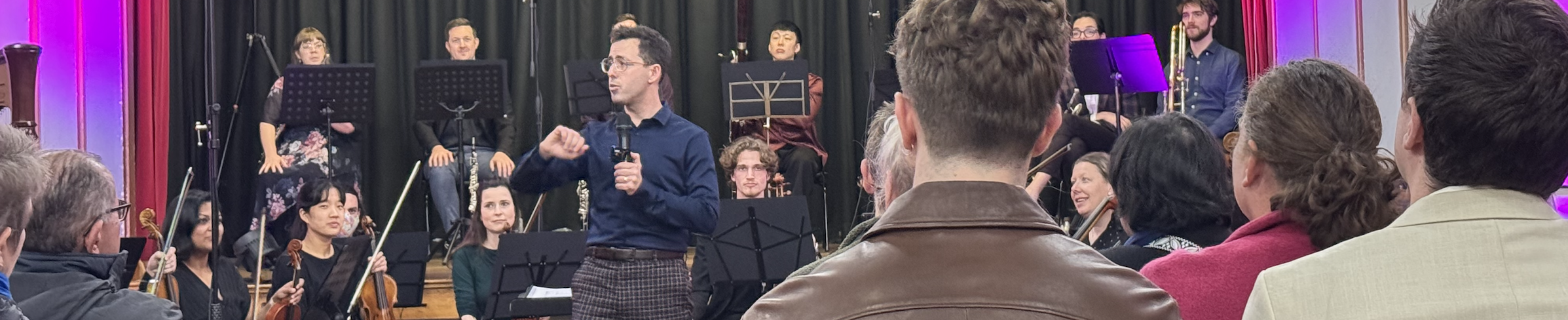
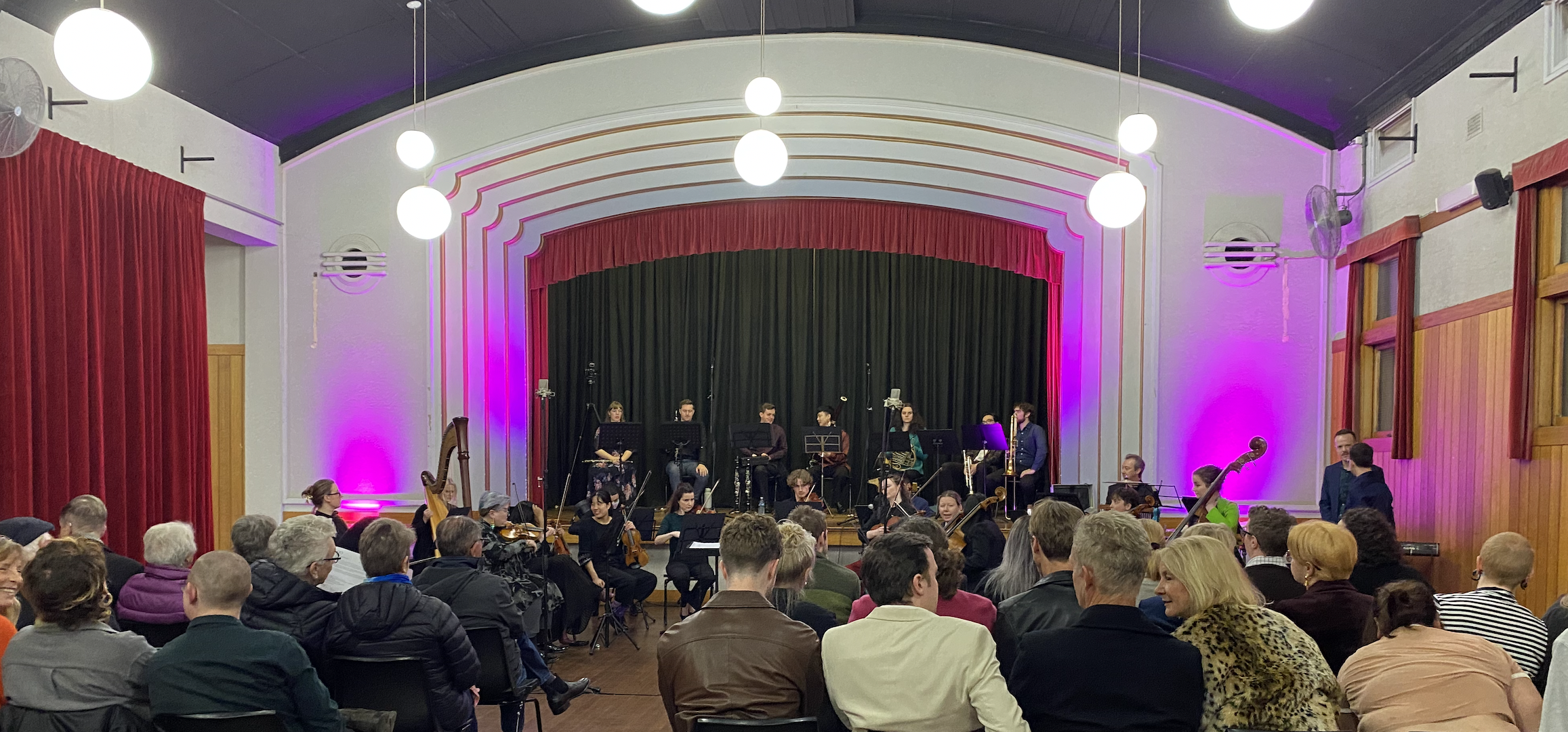
GAG members recently gathered for a very special musical first: the inaugural concert of the Australian Queer Orchestra (AQO), a new initiative led by Ryley Gillen celebrating LGBTQIA+ music, musicians and stories through the rich tradition of orchestral performance.
Titled Love Echoes, the concert brought together LGBTQIA+ and ally musicians for a program that reached across centuries, placing familiar names alongside Australian composers and giving each work a distinctly queer context. From the medieval music of Hildegard von Bingen and the pioneering Ethel Smyth to Camille Saint-Saëns and contemporary Australian composers Christina Green and William Yaxley, the evening demonstrated just how many queer stories can be found — or rediscovered — within classical music.
At the heart of the program was Love Echoes, Ryley Gillen's reimagining of themes from Tchaikovsky's Sixth Symphony, the Pathétique. Rather than simply presenting the music, the performance interwove Tchaikovsky's extraordinary score with narration drawn from his letters to a male lover.
The result gave the familiar music another dimension. Passages we may have heard many times suddenly became connected to the private life of the man who wrote them — his desire, intimacy and the tension between what could be expressed through music and what could not necessarily be lived openly. It was a particularly powerful reminder that queer history has always been present within the arts, even when circumstances required it to remain hidden between the lines.
The full program included Hildegard von Bingen's O magne Pater, arranged by Tim Verdon; Tchaikovsky's Love Echoes, arranged by Ryley Gillen with narration; Christina Green's Land, Sea, Sky; Ethel Smyth's 2 Interlinked French Folk Melodies; a scene from Saint-Saëns' La Foi, arranged by Gillen; and William Yaxley's Kirralaa for Chamber Orchestra.
There was also something wonderfully appropriate about experiencing the concert as a GAG outing. Much of what we explore together through visual art — identity, history, representation and the recovery of stories that have too often been overlooked — was being explored here through sound.
For a first concert, Love Echoes felt less like the arrival of another orchestra than the beginning of a new cultural space: one in which classical music can be heard through the lives and experiences of the people who created it, and where contemporary queer musicians can add their own voices to that continuing tradition.
Congratulations to Ryley Gillen and everyone involved with the Australian Queer Orchestra on an ambitious and moving inaugural performance. GAG was delighted to be there at the beginning — and we look forward to hearing what comes next.